
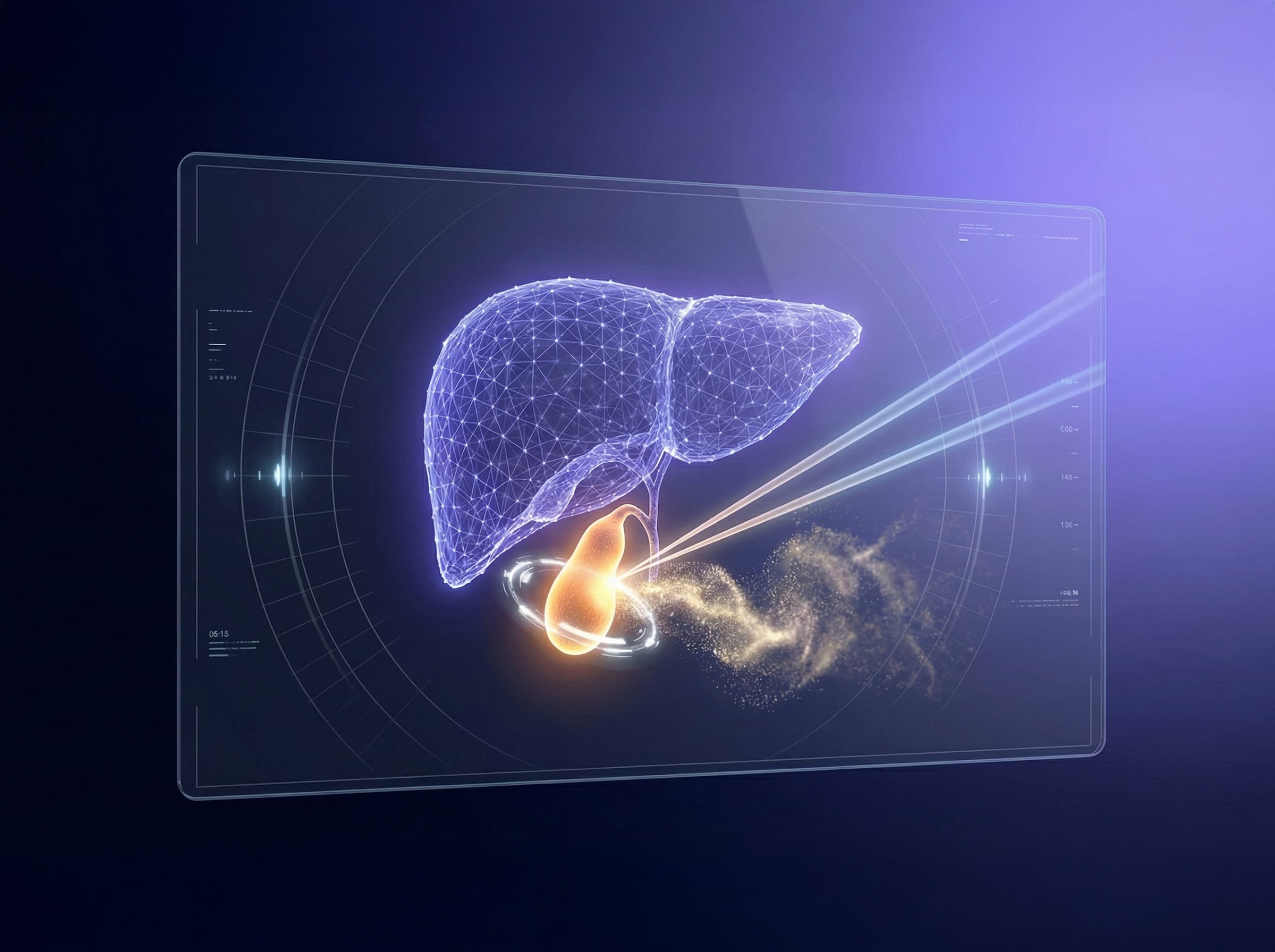
Learn about the gallbladder, symptoms of cholecystitis, open and laparoscopic surgical approaches, potential complications, and how to live safely after gallbladder removal.
What Is the Gallbladder?
The gallbladder is a small organ located beneath the liver. Its primary function is to store bile, which helps digest fats. Despite its small size, inflammation or gallstone formation can cause significant digestive problems.
Symptoms of Acute Cholecystitis:
- Pain in the upper right abdomen, sometimes radiating to the right shoulder and upper back
- Fever above 38°C (100.4°F)
- Yellowing of the skin and whites of the eyes (jaundice)
- Persistent nausea and vomiting
- Loss of appetite
- Stiffness of the right abdominal muscles
- Fatigue and exhaustion
- Abdominal bloating and swelling
- Frequent burping and flatulence
- Headache and chills
- Excessive sweating
Symptoms of Chronic Cholecystitis:
- Stabbing pain in the upper right abdomen in recurring episodes
- Intermittent nausea and vomiting
- Bloating and flatulence
- Rapid heartbeat
- Itching and jaundice
Is Gallbladder Removal Necessary After Inflammation?
Yes. If gallbladder inflammation is neglected, the following complications may arise:
- Liver or pancreatic damage
- Digestive and nutrient absorption problems
- Necrosis (death) of gallbladder tissue
- Gallbladder rupture
- Spread of infection to the abdominal cavity
- Septicemia (blood poisoning)
How Is Cholecystectomy Performed?
- Open Surgery: A large abdominal incision is made to remove the gallbladder. Recovery time is longer.
- Laparoscopic Surgery: Precision instruments and a small camera are inserted through tiny incisions. Less pain, shorter recovery time.
Benefits of Laparoscopic Cholecystectomy:
Reduced post-operative pain, less blood loss, faster recovery, lower risk of complications, and significantly better cosmetic outcomes compared to open surgery. Dr. Mohamed Tawfik prioritizes laparoscopic techniques to help patients recover faster with safer results.